Spinning Natural Colored Cotton
Warm weather is approaching swiftly, and there is no superior thread for high temperatures than cotton.
Did you realize that cotton develops in various hues?
We are all accustomed to observing magnificent, fluffy white cotton, and certainly, cotton colored in all manner of shades. While dyed colors can be quite attractive, I am attracted to the unadorned, muted colors of unprocessedcotton. Cotton can be found in multiple naturally occurring shades: white, green, cinnamon, and brown.
For many individuals, cotton can be somewhat challenging to spin initially. But fortunately, colored cotton is accessible in a format known as Easy Spin Cotton. While still not quite as effortless (for most) to spin as wool roving, it represents a substantial betterment compared to cotton freshly harvested from the boll, particularly for newcomers.
When manipulating cotton, or any short staple fiber, the spinning wheel should be configured to spin on the most compact whorl feasible. On Kromski wheels, this implies the Extra Fast Whorls for the double drive wheels (the Minstrel, Symphony, and Polonaise) and the Fantasia. The single drive Sonata, Prelude, and Interlude will requirethe Faster Flyer.
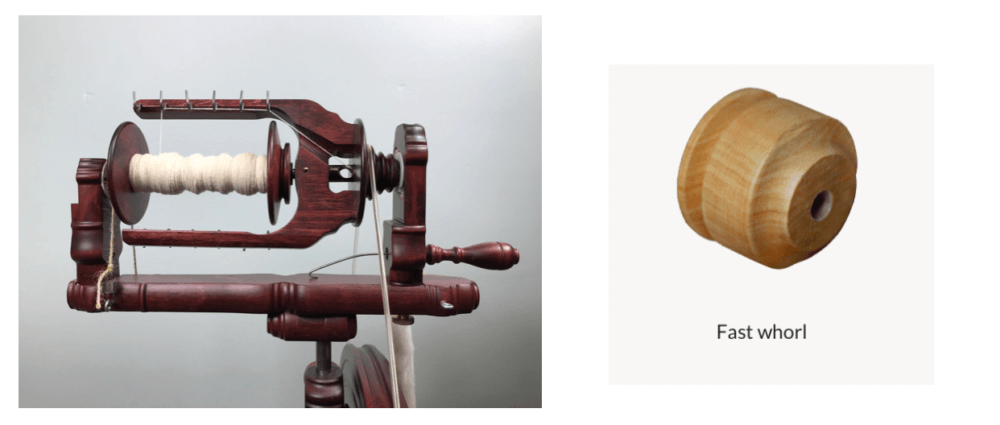
Why is a more compact whorl necessary?
For the fine strands to cohere and form yarn, they must be intertwined more firmly than wool or other fibers possessinga greater staple length. To achieve this additional twist with the standard whorl, the spinner would be compelled to pump the treadle very rapidly. Not only is this challenging for most spinners to sustain, it is simply not pleasant! Therefore, we permit the ratio of the smaller whorl to perform the task for us. It will introduce a substantial amountof twist into the fibers while we operate the treadle with a typical rhythm.
There remains a slight period of adjustment required for spinning these short fibers, but as with all skills, it simply demands repetition.
If you typically spin using a short draw technique, you might be astonished by how brief cotton fibers can be. Some individuals tend to become rigid when the draw becomes this short. Remember to loosen up and perceive the fibers as they flow through your fingers. If you continue to face difficulties, attempt the long draw or perhaps a combination of long/short draw. With some testing and experience, I am confident you will discover that cotton is not as complicatedto spin as you might assume.
Another strategy that might assist is to spin from the opposing end of the roving if you are encountering a particularly tough time. Believe it or not, this can make a tangible difference.
When spinning cotton, it’s also crucial to recall that a denser yarn, such as a worsted or bulky weight, must be constructed with multiple strands (plies). Due to the inherent characteristics of the short fibers, they simply will not remain bound if you attempt to create a thick single strand.
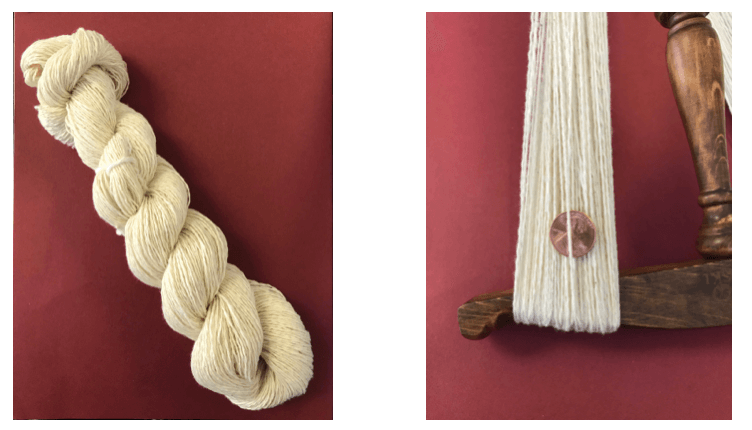
Precisely how brief is cotton? The typical staple length of cotton ranges between 3/8′′ to 181′′. The Easy Spin Cottonthat we employed here has a length of 141′′ to 143′′. Wool, on the other hand, while it differs from variety to variety, is commonly obtainable for spinners between 2 and 5 inches. Kromski Polish Merino is approximately 4′′. Below is a photo to illustrate the difference between the two.

I conceived it would be enjoyable to spin each on a distinct wheel, simply to experience the faster whorl on each model. The Kromski bobbins are transferable, which facilitated switching spinning wheels at will. Each wheel possesses a slightly varied ratio, so there was a small amount of adaptation required on my part as I moved between them, but, unsurprisingly, they all managed the task admirably!
If you are interested in the precise ratios, you will find them enumerated with the wheel descriptions on the website: https://kromskina.com/spinning/
Irrespective of which Kromski wheel you select, once it is set up with a faster flyer or whorl, you will be prepared to broaden your capabilities and spin cotton.
For this project, I intended to showcase all four colors together in a single dish towel.
I started with 2 oz of each shade. I maintained the colors separate rather than combining them so that the finishedtowel would more clearly exhibit the color differences.
Once the skeins were twisted together (plied) (this project utilizes a 2-ply yarn throughout), they needed to be soaked in very warm, nearly hot, water to fix the twist.
Tip: Adding a small quantity of baking soda assists in intensifying the colors. Be certain to rinse it out after soaking.
For reasons related to breaking, some people caution against using hand spun cotton as a warp, but I felt confidentusing it on my Harp Forte. I maintained a gentle tension and proceeded carefully. The yarn did possess a few uneven spots and a couple of areas where the yarn was excessively or insufficiently twisted, so I monitored closely as I advanced the heddle to avoid snapping.
I like to believe my inconsistencies contribute to the appeal of a hand-made project!
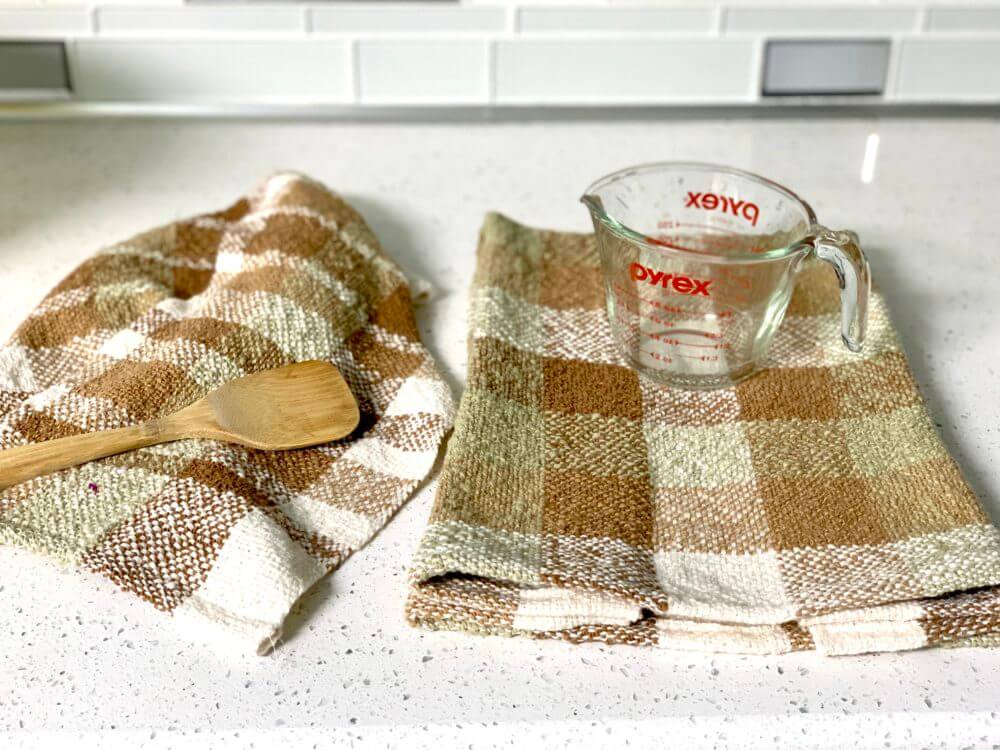
The pattern here is a straightforward checkered design (plaid) comprising 20 threads per group in an 8-dent heddle. There are nine color transitions across a 24′′ Harp Forte. I prepared enough warp to create two towels, each 14 blocks long (35′′ each). After wet finishing, the towels measure 26′′×18′′. Cotton naturally shrinks!
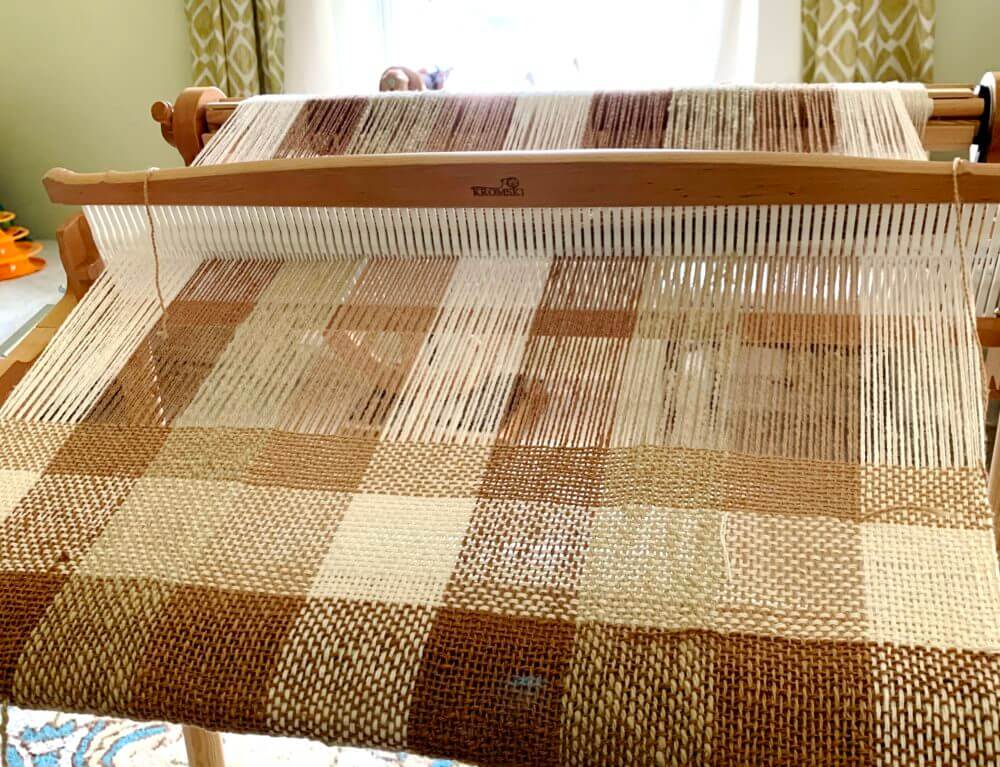
At the beginning of the interlacing process, I ensured to include a couple of inches more using some scrap yarn. After they were all completed (woven), I added some scrap yarn at the conclusion. Once my towels were taken down from the loom, I applied a machine-stitched hem at each extremity of the scrap yarn for extra reinforcement before cleansing the fabric in hot water and drying it on the maximum setting of my dryer.
Following that, each one is separated (cut) and edged (hemmed) into separate towels.
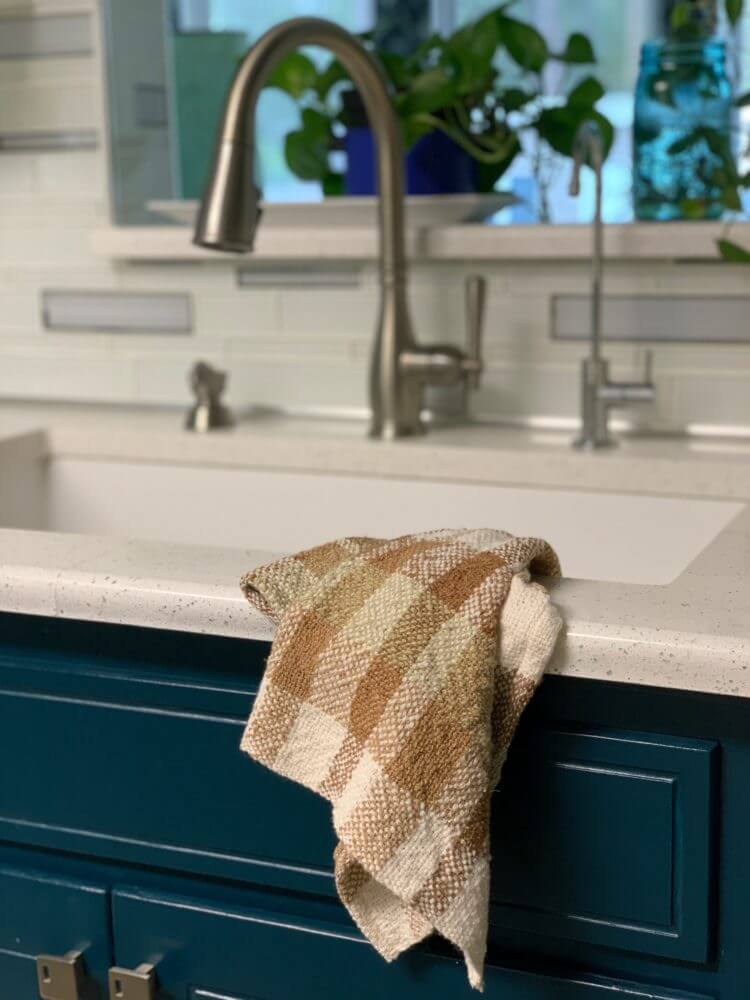
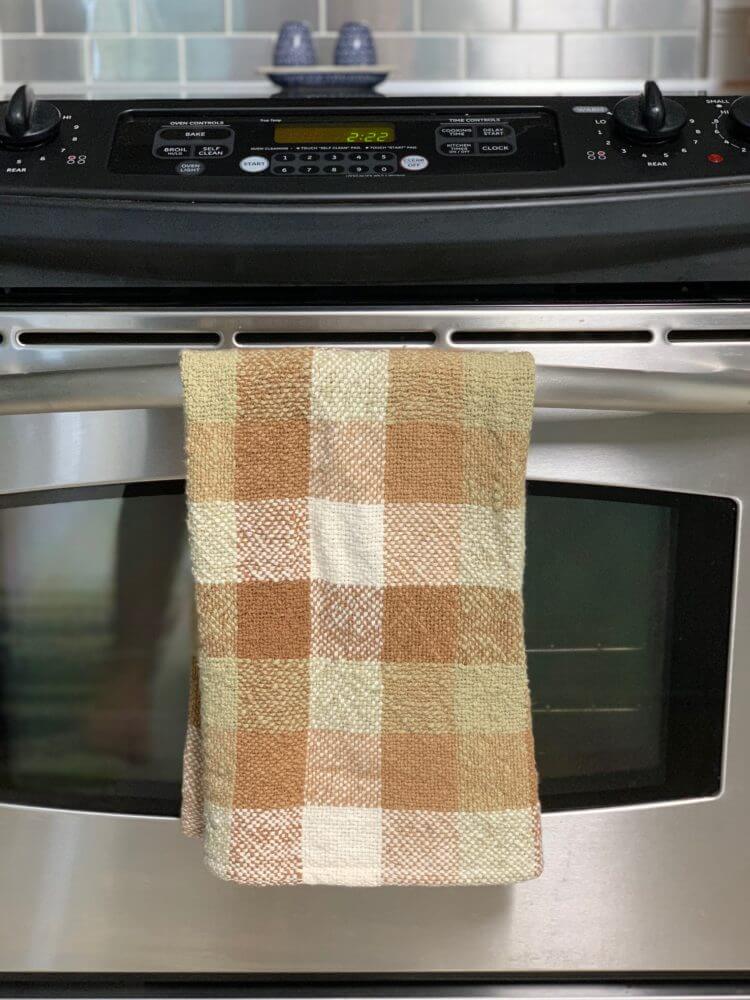
These are highly absorbent, robust towels that would appear splendid in practically any kitchen. Since the fiber is naturally pigmented, they will never lose their color. In fact, the colors may actually intensify with subsequent washes.